

Short-form video (ranging from 10 to 60 seconds) has emerged as the quickest route to capture online attention—and it has transitioned from being a mere option to a necessity. Marketers consistently cite short-form video as one of the most effective content formats, prompting brands to increase their investments due to its success in driving awareness, engagement, and conversion.
What has evolved is where short-form video can be showcased: while it remains a cornerstone of social media, audiences are now anticipating that same bite-sized video experience on websites as well.
The Power of Short-Form Video
Aligning with Modern Consumption Habits
Short-form video is tailored for the way audiences interact with content today: rapid scrolling, viewing without sound, and a tendency to rewatch. Platforms favor this format, leading to increased visibility, while viewers respond with greater engagement and sharing—both key indicators of reach.
This explains why marketers frequently cite short-form video as a leading format for return on investment.
Beyond Social Media: Expanding Horizons
An increasing number of consumers are receptive to short-form video content on publisher sites. This indicates a significant shift: audiences now anticipate video experiences extending beyond social media platforms.
This presents a significant opportunity.
By keeping audiences engaged with short-form content on your platform instead of redirecting them to a conventional webpage, you can guide potential customers closer to making a booking or a purchase.
Harnessing the Impact of 10 Seconds
Many small business owners assume longer videos are the best way to communicate their message.
That’s not always the case.
A well-crafted 10-second video can:
- Instantly grab attention
- Clearly communicate what you offer
- Remove uncertainty for potential customers
- Deliver a quick, helpful insight
- Create an emotional connection
- Encourage immediate action
For a small business, this could look like:
- A quick before-and-after of your work
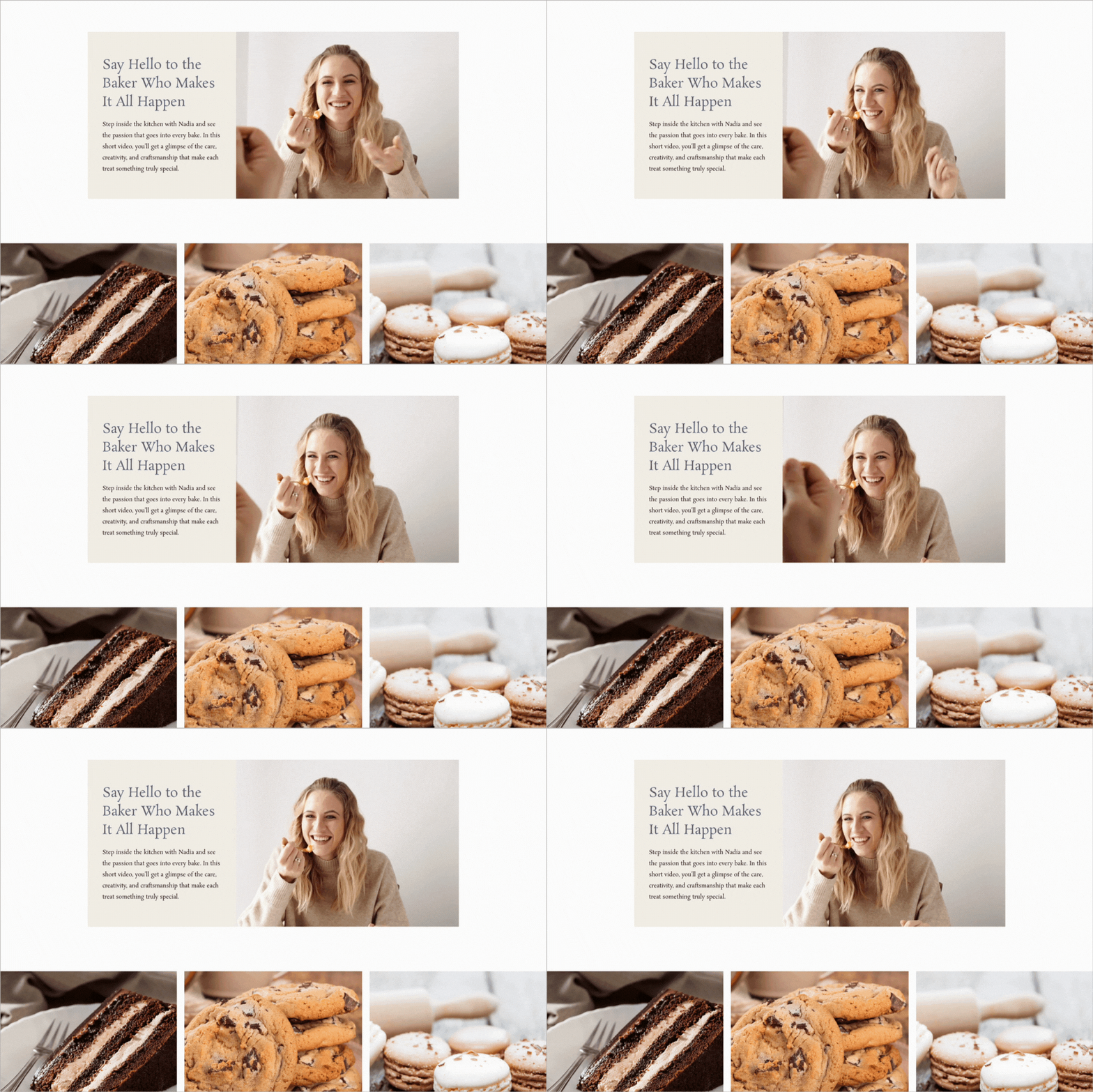
- A behind-the-scenes moment of your process
- A happy customer interaction or reaction
- A short demo of your product or service
- A simple walkthrough of how to get started
Sometimes, ten seconds is all it takes—when it’s done with purpose.
Integrating Short-Form Video into the Customer Journey
Consider this straightforward framework:
Top of funnel (discovery):
Reels, Shorts, TikToks, "common pitfalls," "transformation stories," "point of view"
Middle (consideration):
Frequently asked questions, brief case studies, product comparisons, "the experience of collaborating with us"
Bottom (conversion):
Videos featuring client testimonials, endorsements, guarantees, explanations of limited-time offers
Retention:
Helpful advice for clients, behind-the-scenes insights, announcements of new products, highlights from the community
Annual research consistently indicates that businesses are leveraging video content, particularly through social media platforms.
The focus should not merely be on creating videos but on ensuring they resonate with the current stage of your audience's journey.
Build Content Pillars (So You’re Not Posting Randomly)
Many small business owners feel pressure to constantly post on social media, often chasing trends or scrambling for ideas at the last minute. The result? Content that feels scattered and inconsistent.
A better approach is to build content pillars.
A content pillar is simply a main theme you return to regularly. Instead of posting whatever comes to mind each day, you create a few repeatable categories that guide what you share. This keeps your messaging consistent and helps move potential customers from discovering your business to actually buying from you.
For most small businesses, four core pillars can cover the entire customer journey.
1. Attraction Pillar
This content is designed to introduce your brand to audiences who may not know you yet.
Examples include:
- Transformations or before-and-after results
- Industry trends or quick tips
- POV moments that show what it’s like to work with you
- Eye-catching reveals or demonstrations
This type of content works well for grabbing attention and expanding your reach.
Goal: Reach new people and get attention
2. Authority Pillar
Once someone discovers your business, they often want reassurance that you’re the right choice. Authority content positions you as a knowledgeable professional.
Examples include:
- Answering common customer FAQs
- Educational tips or guides
- Explaining your process or how your service works
- Busting common myths in your industry
This type of content helps potential customers feel confident in choosing you.
Goal: Reduce hesitation and build credibility
3. Connection Pillar
People connect with people—not just products or services. This pillar allows your audience to see the personality behind the brand.
Examples include:
- Customer reactions or success stories
- Behind-the-scenes clips of your work
- Sharing your story or why you started your business
- Emotional or meaningful moments with customers
These posts help create familiarity and trust over time.
Goal: Build trust and show the human side of your business
4. Conversion Pillar
This content focuses on turning interested followers into paying customers by clearly explaining how they can work with you.
Examples include:
- Explaining how to book or purchase
- Sharing product or service packages
- Highlighting testimonials and customer reviews
- Announcing limited availability or special offers
This type of content helps remove confusion and encourages action.
Goal: Make it easy for people to take the next step
A Simple Weekly System
One simple way to stay consistent is to create one piece of content for each pillar every week. This approach naturally guides your audience through the full customer journey:
Discover → Trust → Connect → Buy
By structuring your content this way, you avoid the stress of constantly wondering what to post next—and instead build a strategy that supports real business growth.
How to Leverage Short-Form Video on Social Media
1. Pick 3 repeatable content “series”
Consistency beats “random viral attempts.” Good starter series:
- Quick tip (weekly): “One thing most people get wrong about…”
- Behind the scenes (weekly): your process in 15 seconds
- Proof (weekly): results, reactions, before/after, testimonial snippet
2. Build for silent-first and thumb-stopping
Most people watch without sound at first. So:
- Put the headline in the first second
- Use captions (burned in or platform captions)
- Keep cuts tight; remove pauses
3. Use platform-native publishing (and repurpose intelligently)
Shoot once, publish everywhere:
- TikTok
- Instagram Reels
- YouTube Shorts
- Facebook Reels
Adjust captions and CTAs per platform.
4. Add CTAs that match the stage
Instead of always saying “Book now,” rotate calls-to-action:
- “Comment ‘GUIDE’ and I’ll send it”
- “Save this for later”
- “Visit the link in bio to see pricing”
- “Watch the pinned video to see examples”
How to Leverage Short-Form Video on Your Website (Where Most Brands Underuse It)
Social gets the views. Your website closes the deal. Short videos on-site reduce friction because they show what you do faster than paragraphs can.
With uploadable short videos in banners, story panels, list item layouts, and pinboard list item layouts, your website becomes immersive instead of static.
Here are the best on-site placements (and what to post in each).
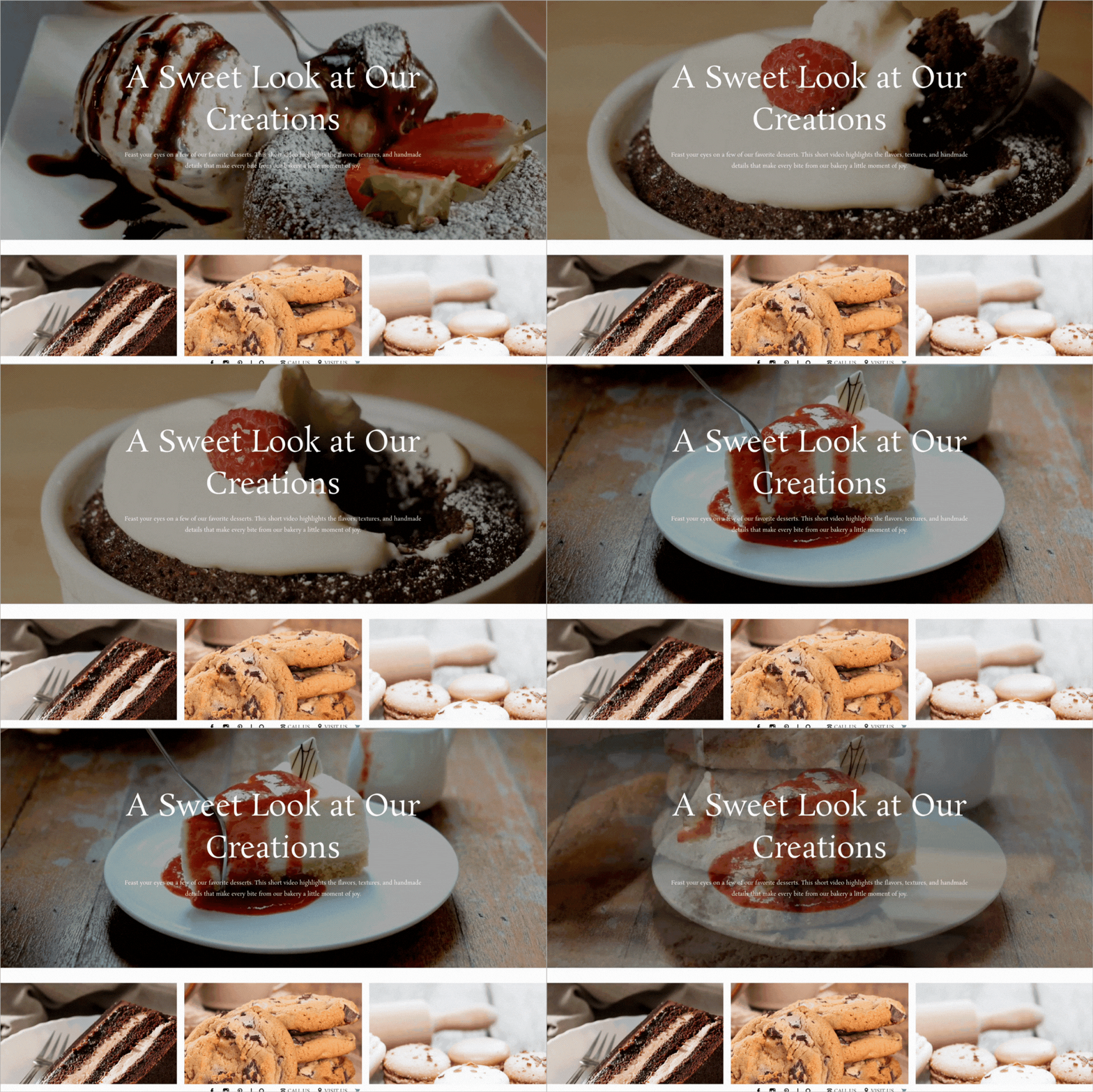
1. Banner Videos (Homepage + Landing Pages)
A 10–20 second loop (no audio required) showing outcome + human presence:
- Product in use
- Quick montage of work/results
- Short brand reel with 3–5 clips
Goal: Instant positioning + vibe + credibility
2. Story Panels (Scrollytelling Sections)
- “Problem → solution” micro-demo
- Quick founder intro
- FAQ answered on camera
- Proof montage (reviews/results)
Each panel should have one job: one message, one video.
Goal: Guide visitors through a narrative
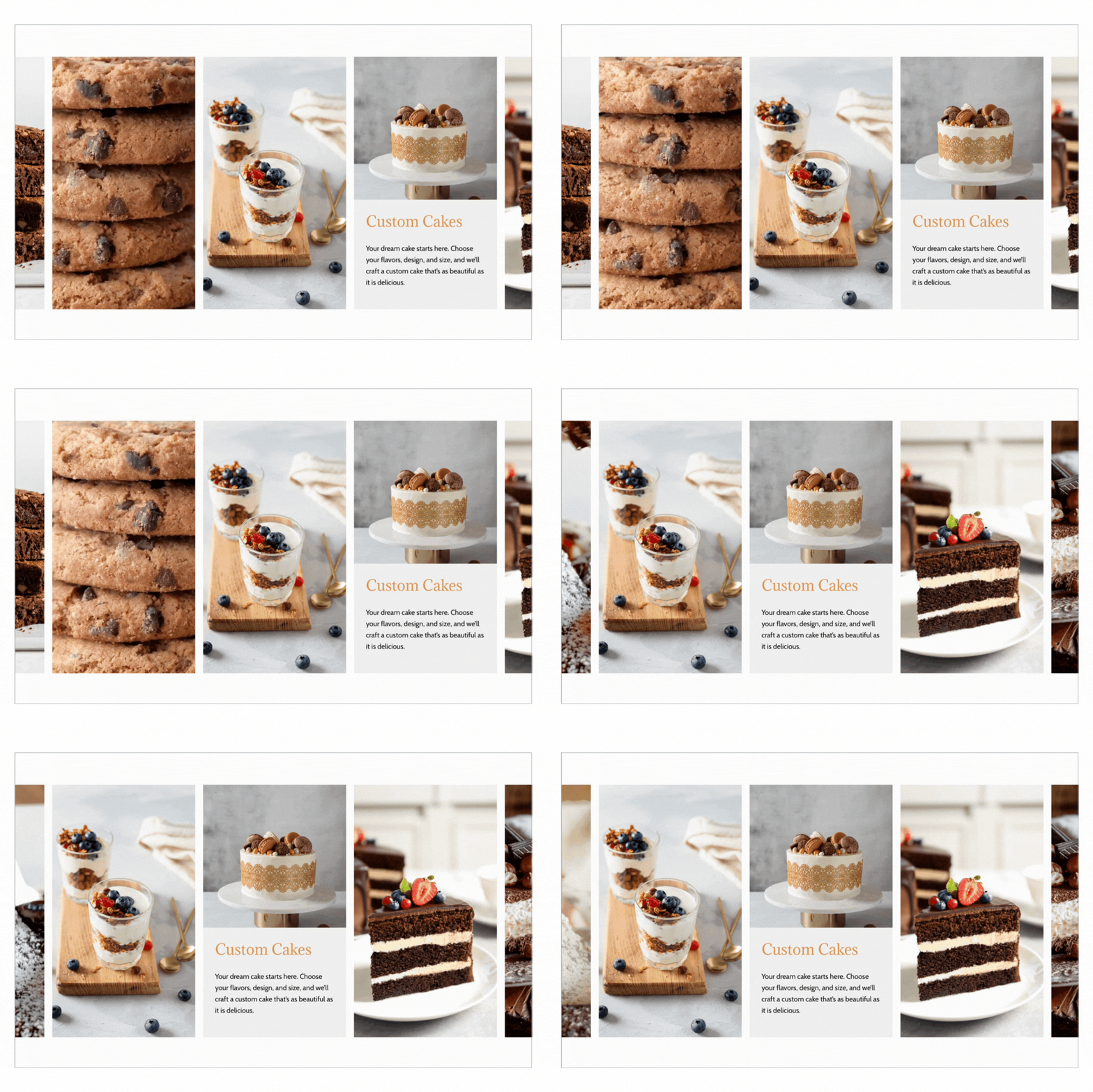
3. Video in Pinboard List Item Layouts
Pinboard-style layouts allow visitors to explore your work visually, similar to how people naturally scroll through social media platforms. Adding short videos makes the experience even more engaging.
- Rotating examples of your work or results
- Mini case studies or project highlights
- Category-based clips (for example: “Projects,” “Client Results,” “Behind the Scenes,” or “Before & After”)
This format encourages visitors to browse, explore, and stay longer on your site.
Pinboard layouts combined with short video clips mirror the way people already consume content on social platforms—except now the experience is happening on your own website, where you control the traffic and the customer journey.
Goal: Create a visual “browse and believe” experience.
Enhancing Discoverability: Essential Video SEO Strategies
Simply posting videos isn’t sufficient; search engines require context to index and rank them effectively. Regardless of whether your videos appear in banners or stories, anchor them with robust contextual support, including well-defined H1 and H2 headings, descriptive text that clarifies the content, and pertinent title tags and meta descriptions.
Always provide captions (and ideally transcripts) to boost accessibility, extend viewer engagement, and supply search engines with indexable text.
Finally, optimize core elements: position keyword-rich headings adjacent to the video and select impactful, relevant thumbnails. Context is key to improving visibility—which in turn drives traffic.
Short-form video is more than just a fleeting trend. It emphasizes precision and the establishment of trust in mere seconds.
When harmonized with your content strategy, customer journey, and optimal web placement, this format transforms from basic content to a powerful growth mechanism.
For small businesses especially, this offers a distinct advantage since you already convey emotions through visual storytelling.
Now, seize every opportunity to implement this strategy.


Leave a comment
0 Comments